
Carne Guisada stands as one of the most beloved comfort dishes in Latin cuisine, celebrated for its deeply savory flavor, fork-tender beef, and luxurious gravy that coats every bite. We present a refined, authentic, and meticulously crafted version of this classic Latin beef stew, designed to deliver consistent results and exceptional taste. Slowly simmered chunks of beef, aromatic vegetables, warm spices, and a well-balanced sauce come together to form a dish that defines hearty home cooking at its finest.
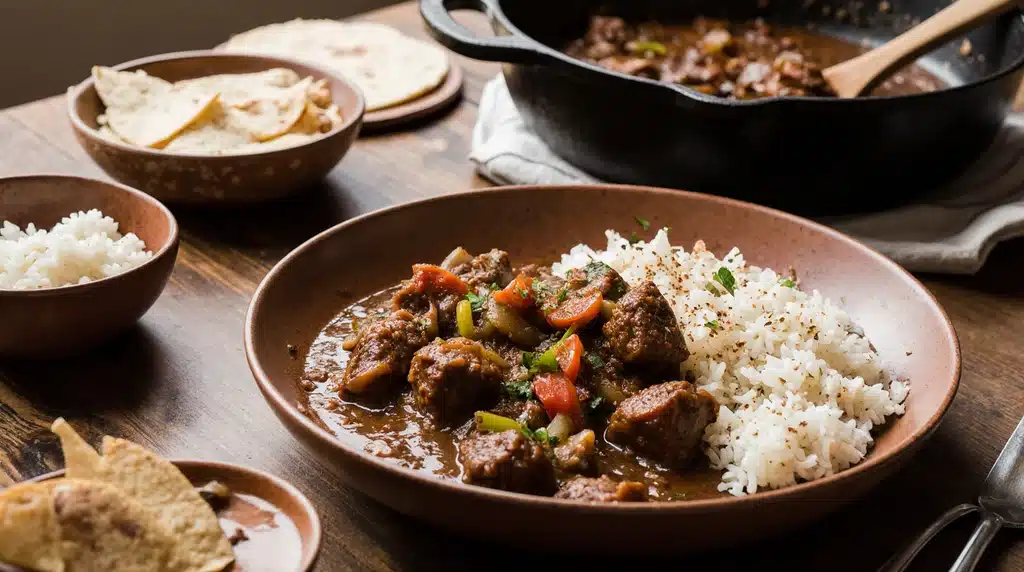
This Carne Guisada recipe is ideal for family dinners, special gatherings, or meal preparation, offering rich flavor that improves with time. Served traditionally with rice, refried beans, and warm tortillas, it delivers a complete and satisfying meal rooted in tradition and perfected through technique.
Why Carne Guisada Is a Timeless Classic
Carne Guisada translates simply to “stewed meat,” yet the simplicity of its name belies the complexity of its flavor. This dish showcases the power of slow cooking, allowing collagen-rich beef to break down into tender perfection while absorbing spices and aromatics. The resulting stew is comforting, balanced, and deeply flavorful without being overpowering.
We rely on traditional ingredients such as cumin, chili powder, garlic, onion, and tomatoes, building layers of flavor through proper searing, controlled simmering, and careful seasoning. The gravy, thickened naturally with flour and enriched with beef broth, becomes the defining element that binds the entire dish together.
Essential Ingredients for Perfect Carne Guisada
The success of this dish depends on quality ingredients and precise preparation. Each component plays a critical role in developing the final flavor profile.
We use stew meat cut into uniform one-inch cubes, ensuring even cooking and tenderness. Olive oil or vegetable oil provides the base for searing, while onion, green bell pepper, and garlic form a classic aromatic foundation. Fresh roma tomatoes add acidity and brightness, balanced by tomato paste for depth and richness.
Seasoning is intentionally restrained yet effective. Ground cumin, chili powder, salt, and black pepper enhance the beef without overpowering it. A beef bouillon cube intensifies the savory notes, while low-sodium beef broth allows full control over salt levels. Flour is incorporated to achieve a smooth, velvety gravy that clings beautifully to the meat.
Fresh cilantro added at the end provides a clean herbal finish that elevates the dish just before serving.
Preparation Time and Cooking Method
PrintCarne Guisada: Authentic Latin Beef Stew with Rich Gravy

Carne Guisada is a classic Latin beef stew made with tender chunks of beef slowly simmered in a rich, savory gravy with tomatoes, peppers, garlic, and warm spices. This comforting dish is perfect for family dinners and is traditionally served with rice, refried beans, and warm tortillas.
- Prep Time: 15 minutes
- Cook Time: 2 hours
- Total Time: 2 hours 15 minutes
- Yield: 6 servings 1x
- Category: Dinner
- Method: Simmering
- Cuisine: Mexican
Ingredients
1/4 cup olive oil or vegetable oil
3 pounds beef stew meat, cut into 1-inch cubes
1 large onion, chopped
1 medium green bell pepper, chopped
4 cloves garlic, minced
3 large roma tomatoes, diced
1 teaspoon salt
1/2 teaspoon black pepper
2 teaspoons ground cumin
1 1/2 teaspoons chili powder
1 tablespoon tomato paste
1 beef bouillon cube
3 tablespoons all-purpose flour
3 to 4 cups low-sodium beef broth
2 tablespoons fresh cilantro, chopped
Instructions
1. Heat oil in a large skillet over medium-high heat and sear the beef in batches until browned on all sides.
2. Remove the beef from the skillet and set aside on a plate.
3. Add remaining oil, then cook onion and bell pepper until the onion is translucent.
4. Stir in garlic and cook briefly until fragrant, then add tomatoes and cook for one minute.
5. Season with salt, pepper, cumin, and chili powder, then stir in tomato paste and crumbled bouillon.
6. Sprinkle flour over the vegetables and cook, stirring, for one to two minutes.
7. Slowly add one cup of beef broth, stirring until a thick gravy forms.
8. Return the beef to the skillet and add remaining broth until mostly covered.
9. Cover and simmer on low heat for about 90 minutes, stirring occasionally, until beef is very tender.
10. Adjust seasoning, garnish with cilantro, and serve warm.
Notes
Searing the beef is essential for developing deep flavor.
For a richer taste, replace part of the beef broth with beer.
Potatoes can be added for a heartier stew.
This dish is mildly seasoned; add cayenne or hot chili powder if more heat is desired.
Leftovers keep well in the refrigerator for up to five days or can be frozen for six months.
Nutrition
- Serving Size: 1 serving
- Calories: 447
- Sugar: 3 g
- Sodium: 771 mg
- Fat: 21 g
- Saturated Fat: 5 g
- Unsaturated Fat: 13 g
- Trans Fat: 0 g
- Carbohydrates: 9 g
- Fiber: 2 g
- Protein: 54 g
- Cholesterol: 141 mg
This Carne Guisada requires minimal preparation and rewards patience during cooking. With 15 minutes of prep time and approximately 2 hours of slow simmering, the total time investment is justified by the depth of flavor achieved.
Using a 12-inch stainless steel skillet ensures proper heat distribution and optimal browning. The wide surface area allows moisture to evaporate efficiently, which is essential for developing flavor during the searing process.
Searing the Beef for Maximum Flavor
We begin by heating oil over medium-high heat and searing the beef in batches. This step is non-negotiable. Proper searing caramelizes the natural sugars in the meat, creating a flavorful crust that enriches the entire stew. Overcrowding the pan is avoided to ensure browning rather than steaming.
Once browned, the beef is set aside, allowing us to build the stew in the same pan, capturing every bit of flavor left behind.
Building the Aromatic Base
The remaining oil is added to the skillet, followed by chopped onion and green bell pepper. These vegetables are cooked until the onion becomes translucent, releasing sweetness and aroma. Garlic is added briefly to prevent burning, followed by diced roma tomatoes that soften and integrate into the base.
This stage forms the backbone of the stew, where sweetness, acidity, and savory notes begin to harmonize.
Layering Spices and Developing Depth
Salt, black pepper, cumin, and chili powder are stirred into the vegetable mixture, blooming in the residual heat to release their essential oils. Tomato paste is incorporated next, providing concentrated umami and color. The beef bouillon cube is crumbled directly into the pan, intensifying the savory profile.
At this point, the browned bits at the bottom of the skillet are scraped up, ensuring no flavor is left behind.
Creating a Silky, Rich Gravy
Flour is sprinkled evenly over the mixture and cooked briefly to eliminate any raw taste. Beef broth is added gradually, allowing the sauce to thicken smoothly without lumps. The result is a rich, cohesive gravy that forms the signature texture of Carne Guisada.
Once the base is ready, the seared beef is returned to the skillet along with additional beef broth, ensuring the meat is mostly submerged for even cooking.
Slow Simmering for Tender Perfection
The stew is covered and simmered gently over low heat for at least 90 minutes, with occasional stirring. This slow cooking process allows the connective tissue in the beef to break down, resulting in exceptionally tender meat that nearly falls apart.
Additional broth may be added if the gravy becomes too thick, maintaining the ideal consistency throughout the cooking process.
Final Seasoning and Garnish
Before serving, the stew is tasted and adjusted for seasoning. Freshly chopped cilantro is sprinkled over the top, adding brightness and visual appeal. This final touch balances the richness of the dish and enhances its overall presentation.
Serving Suggestions for Carne Guisada
Carne Guisada is traditionally served with steamed white rice, refried beans, and warm flour or corn tortillas. The gravy pairs beautifully with rice, soaking in and delivering flavor in every bite. Tortillas are ideal for scooping and savoring the sauce, making the meal interactive and satisfying.
For a heartier variation, diced potatoes may be added during the simmering stage. For added depth, beef broth can be partially replaced with beer, lending subtle bitterness and complexity.
Storage and Make-Ahead Tips
This stew stores exceptionally well, making it ideal for leftovers and meal preparation. Stored in an airtight container, Carne Guisada remains fresh in the refrigerator for up to five days. It also freezes well for up to six months, retaining both texture and flavor.
Reheating is simple. Gently warm on the stovetop or in the microwave, adding a small splash of beef broth if needed to restore the gravy’s consistency.
Nutritional Overview
Each serving of Carne Guisada delivers a balanced nutritional profile. With approximately 447 calories per serving, it offers high-quality protein, essential minerals such as iron and potassium, and moderate fat content. The dish is naturally low in carbohydrates, making it suitable for various dietary preferences.
A Traditional Dish Perfected Through Technique
Carne Guisada represents the essence of Latin home cooking, where patience, technique, and quality ingredients create unforgettable results. By respecting traditional methods and focusing on flavor development at every stage, we achieve a stew that is deeply satisfying, consistently tender, and rich without excess.
This recipe delivers authenticity, comfort, and versatility in one timeless dish, making it a staple worth mastering and sharing.